Planning electrical upgrades in Driftwood, TX? Here’s the homeowner’s checklist with costs, warning signs, smart upgrades, and contractor tips.
You know that nagging feeling when your house just doesn’t keep up anymore? The breaker pops every time you run the toaster and the microwave. The bedroom lights dim when the AC kicks on. You wanted to add an EV charger last summer but never did because the panel looked sketchy. Sound familiar?
A lot of homes around Driftwood are still running on wiring and panels that were put in back when families had two TVs and one fridge. Modern life pulls way more power, and the old setup just can’t handle it. The good news is, you don’t have to redo your whole house. A few smart upgrades can fix the worst stuff without breaking your budget. We’ve been doing this work all over the Hill Country for years, and this is our honest checklist of what to look at first. We’re Red Grizzly Electric and we put this together so you don’t have to figure it out alone.
Why Upgrades Matter More Than You Think
Some folks treat electrical upgrades like an optional thing. Like new paint or fancy cabinet pulls. They’re not. Bad wiring causes around 51,000 home fires a year in the US, says the Electrical Safety Foundation International. That’s about 140 every day. Most of those fires start in panels or outlets that nobody touched for 30, 40 years.
There’s also the money angle. The US Department of Energy puts out studies showing that homes with old wiring and undersized panels often pay 10 to 15% more on their power bill. The electricity has to fight harder to do the same work. New wiring and a right-size panel let your appliances run efficient, save power, and stop tripping breakers all the time.
The 7-Point Checklist
We’ll walk through each item one by one. Don’t feel like you have to do all of these at once. Pick the ones that match what your house actually needs.
1. Check Your Panel Age and Brand
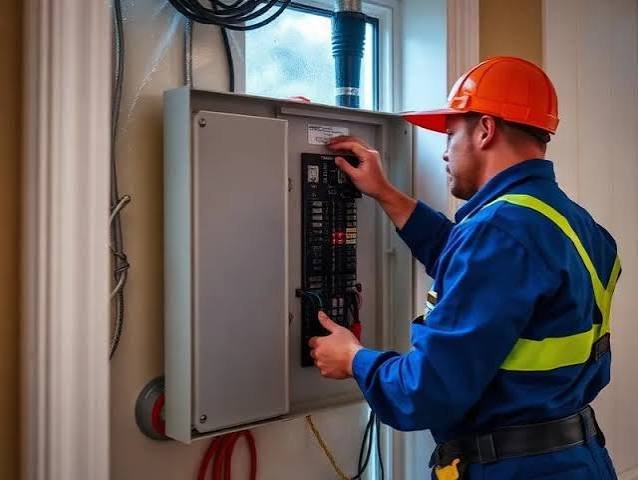
This is item number one for a reason. Your electrical panel is the heart of the whole system. If it’s old, undersized, or one of the bad brands, nothing else really matters until you fix it.
Pull open the panel door (don’t touch anything inside, just look). You should see a label with the brand name. Square D, Eaton, Siemens, Leviton, GE are all fine. If you see Federal Pacific, Zinsco, Pushmatic, or Challenger, that’s bad. Those brands have known fire problems and most insurance companies hate them.
Also check the main amp rating. It’ll say 100A, 150A, or 200A somewhere on the main breaker. Anything under 150A in a modern home is probably too small.
2. Count Your Outlets Per Room
Walk through each room and count the outlets. The current code says you should have an outlet within 6 feet of any usable wall space. Bedrooms should have at least 4. Kitchens need outlets above the counter every 4 feet. Bathrooms need at least one GFCI outlet near the sink.
If you’re running power strips and extension cords all over the place, that’s a sign you don’t have enough outlets. Power strips are a fire risk when overused, especially in older homes with two-prong outlets that have no ground.
3. Look for GFCI and AFCI Protection
GFCI outlets are the ones with the little “test” and “reset” buttons. They cut power if water gets in, which is why you need them in kitchens, bathrooms, garages, outdoor outlets, and laundry rooms.
AFCI breakers protect against arc faults, which is a fancy way of saying loose connections that spark and start fires. Newer code requires AFCI on most bedroom circuits.
If you don’t have either, that’s a quick win. Adding GFCI outlets and AFCI breakers is one of the cheaper upgrades and one of the safest.
For folks looking foraffordable electrical upgrade services in Driftwood, TX, this is usually where we start because the cost is low and the safety bump is huge.
4. Test Outlets and Switches Around the House
Get a cheap outlet tester from any hardware store. They cost about $10 and tell you if an outlet is wired right. Test every outlet. You’d be surprised how many old houses have outlets with reversed wires or missing grounds.
For switches, just feel them. If any switch is warm to the touch when you flip it, that’s a real problem. Same with outlets. A warm outlet means a loose connection inside the wall, which can start a fire.
Here’s a quick reference for what each upgrade usually costs in Driftwood:
| Upgrade Type | Average Cost | Time to Complete |
| Add GFCI outlets (per outlet) | $150 – $250 | 30 min each |
| Replace standard outlet | $100 – $175 | 20 min each |
| New AFCI breaker | $50 – $100 | 30 min each |
| Add new circuit | $300 – $800 | 2–4 hours |
| Whole-house rewire | $8,000 – $20,000 | 1–2 weeks |
| Panel upgrade (100A to 200A) | $1,800 – $3,500 | 4–8 hours |
| EV charger circuit | $600 – $1,500 | 3–5 hours |
| Whole-house surge protector | $300 – $600 | 1–2 hours |
5. Plan for an EV Charger Even If You Don’t Have One Yet
Even if you’re not buying an electric car this year, plan the wiring now. EV adoption is moving fast around Texas. The Texas Department of Transportation says EV registrations in the state jumped over 60% from 2022 to 2024.
When you do any other electrical work, ask the electrician to run a 50-amp circuit to the garage while the walls are open or the panel is being touched. Adding it during another job costs a third of what it costs to do it as a standalone project later.
6. Add a Whole-House Surge Protector
This one is cheap and worth every penny. A whole-house surge protector goes inside or right next to your panel. It catches power spikes from the grid before they reach your appliances.
Texas weather brings a lot of lightning. One bad storm can fry your TVs, computers, smart appliances, and AC units in a single flash. The protector usually runs $300 to $600 installed and lasts 10 to 15 years. Saves you thousands the first time a big storm hits.
7. Check Smoke and CO Detectors
Last but not least, check every smoke detector and carbon monoxide detector in the house. Code in most Texas counties requires hardwired smoke detectors with battery backup in every bedroom, hallway, and on every floor. CO detectors are required near sleeping areas if you have gas appliances.
If your detectors are battery-only or older than 10 years, replace them. Better yet, upgrade to the interconnected hardwired ones. When one alarm goes off, they all go off. That’s a huge deal at night.
For homeowners who want the best electrical system upgrades in Driftwood, TX, putting all these pieces together with one licensed contractor saves time and money over hiring different guys for each job.
A Quick Story From a Driftwood Job
Last spring a family in Driftwood called us out for a simple panel inspection. They thought they just wanted to add an EV charger. Once we got there, we found a Federal Pacific panel from 1979, only 100 amps, with no GFCI in the kitchen or bathrooms, no AFCI anywhere, and a melted spot on one of the breakers.
We sat down at the kitchen table and went through the whole checklist with them. They picked the most urgent stuff first. Panel upgrade to 200 amps, GFCI in the kitchen and two bathrooms, AFCI breakers on bedroom circuits, and the EV circuit. Total cost came in around $4,200. Took us two days to finish.
A month later they told us they hadn’t tripped a breaker once, and the cooking range no longer dimmed the lights when it kicked on. Small wins, but real ones.
How to Pick the Right Electrician
Don’t go with whoever’s cheapest. Cheap usually means uninsured, unlicensed, or both. Ask for proof of Texas state electrical license. Check Google reviews and the BBB. Make sure the quote is in writing and lists the brand of every part going in.
Also watch for big deposit demands. A normal deposit is 10 to 25%. Anyone asking for half the money upfront is a warning sign. Real electricians get paid when the work is done and the inspector signs off.
Conclusion
A safe, modern electrical system isn’t a luxury. It’s the thing that lets your home work the way you need it to without putting your family at risk. The seven items on this checklist aren’t all-or-nothing. Start with the most urgent ones and work your way down at your own pace. The trick is finding a licensed electrician who answers your questions, pulls the right permits, and treats your home like their own. We hope this list gives you a clear starting point. When you’re ready to tackle any of it, we’re around to help.
FAQs
How do I know which electrical upgrades I need first?
Start with the panel. If it’s old, undersized, or one of the bad brands like Federal Pacific, that has to be fixed before anything else. After the panel, focus on GFCI outlets in kitchens and bathrooms, then AFCI breakers in bedrooms, then any rooms where you’re running power strips. A licensed electrician can walk through your house in about an hour and give you a clear order.
Are electrical upgrades worth the money for a home I’ll sell soon?
Usually yes, especially the panel upgrade and any work that gets a closed-out permit. Home inspectors flag old panels and missing GFCI outlets, and buyers ask for thousands off the price if those things show up. Spending $3,000 to fix the panel often saves $5,000 to $10,000 in negotiations later.
Can I do any of these upgrades myself?
Texas law lets homeowners do basic stuff in their own homes, like swapping out a light fixture or replacing an existing outlet with a like-for-like one. Anything that adds new circuits, new wiring, or touches the panel must be done by a licensed electrician. DIY work that fails inspection costs way more to fix than just hiring the right person from the start.
How long does a whole-house upgrade project take?
It depends on what’s included. A panel swap alone takes 4 to 8 hours. Adding GFCI and AFCI to a whole house takes 1 to 2 days. A full rewire of an older home can run 1 to 2 weeks. If you bundle several upgrades together, most jobs around Driftwood wrap up in under a week with one inspection at the end.
Will my insurance company give me a discount after upgrades?
A lot of them do, especially for panel replacements (swapping out old Federal Pacific or Zinsco panels) and whole-house surge protector installs. Some insurers also discount homes with hardwired smoke detectors. Call your agent with the closed-out permit and the installation paperwork and ask about the safety-upgrade discount.
Start with the panel. If it’s old, undersized, or one of the bad brands like Federal Pacific, that has to be fixed before anything else. After the panel, focus on GFCI outlets in kitchens and bathrooms, then AFCI breakers in bedrooms, then any rooms where you’re running power strips. A licensed electrician can walk through your house in about an hour and give you a clear order.
Usually yes, especially the panel upgrade and any work that gets a closed-out permit. Home inspectors flag old panels and missing GFCI outlets, and buyers ask for thousands off the price if those things show up. Spending $3,000 to fix the panel often saves $5,000 to $10,000 in negotiations later.
Texas law lets homeowners do basic stuff in their own homes, like swapping out a light fixture or replacing an existing outlet with a like-for-like one. Anything that adds new circuits, new wiring, or touches the panel must be done by a licensed electrician. DIY work that fails inspection costs way more to fix than just hiring the right person from the start.
It depends on what’s included. A panel swap alone takes 4 to 8 hours. Adding GFCI and AFCI to a whole house takes 1 to 2 days. A full rewire of an older home can run 1 to 2 weeks. If you bundle several upgrades together, most jobs around Driftwood wrap up in under a week with one inspection at the end.
A lot of them do, especially for panel replacements (swapping out old Federal Pacific or Zinsco panels) and whole-house surge protector installs. Some insurers also discount homes with hardwired smoke detectors. Call your agent with the closed-out permit and the installation paperwork and ask about the safety-upgrade discount.